Suez
Updated
What it is
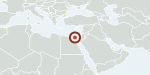
The Suez Canal is a 193-kilometer artificial waterway in Egypt connecting the Mediterranean Sea to the Red Sea via Port Said and the city of Suez, letting ships bypass the Cape of Good Hope. It is one of the world's most important shipping chokepoints, historically carrying roughly 12% of world trade by volume and close to 30% of global container traffic.
Why it matters lately
Canal revenue fell sharply in 2023-2024 as Houthi attacks pushed shipping around Africa, but recovered to $4.67 billion in fiscal year 2025/2026 (up 23% year on year) as regional tensions temporarily eased and traffic grew. However, the Houthis declared a renewed blockade and resumed attacks on shipping in the Red Sea corridor from around July 20-22, 2026, reintroducing risk to the Suez-dependent route even as canal authorities had projected further revenue growth toward $8 billion in FY2026/27.
Asymmetric Analytics view
Inference (AA): Suez transit volumes and revenue are a real-time proxy for Red Sea/Houthi risk and broader Middle East shipping security, feeding into the graph's Hormuz and Red Sea risk-correlation models.