Diesel at $6.699 in Salt Lake City as IEA Warns Supply Will Stay Tight Well Into 2027
By Asymmetric Analytics
Analysis
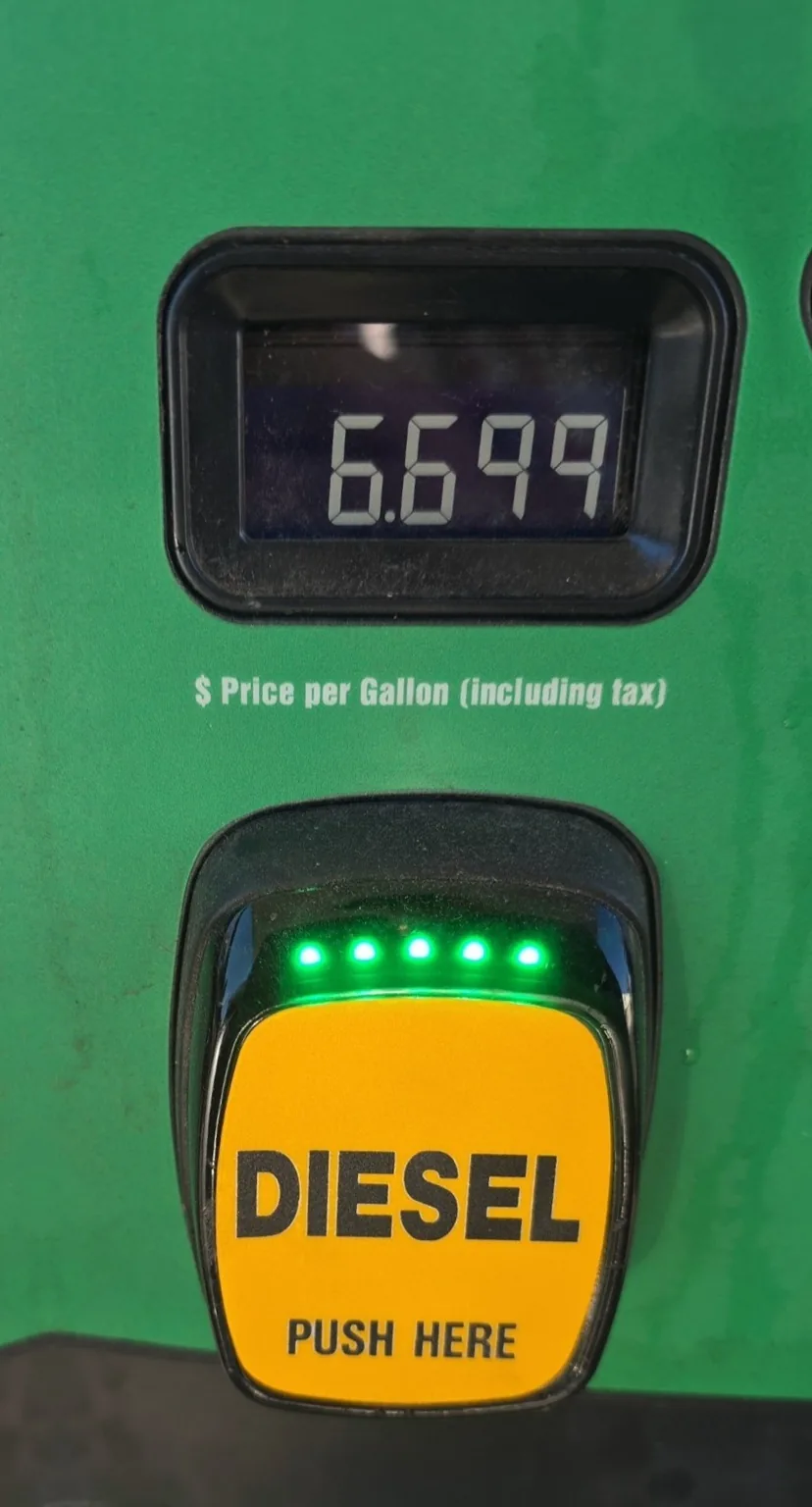
A diesel pump in Salt Lake City showed $6.699 a gallon on October 15. Two days earlier the International Energy Agency said the world's diesel balance "will remain tight well into 2027" and that lost inventories are unlikely to be rebuilt before the second half of that year. The pump price is one observation at one station. The IEA forecast is about the global market. This piece explains what connects them and what does not.
What the IEA reported
The IEA's October Oil Market Report , published October 14, said:
Exports fell. Preliminary trade data put global diesel exports in September at 4.7 million barrels a day, nearly 700,000 barrels a day lower than a year earlier. Losses from Russia and the Middle East were only partly offset by supply from elsewhere.
Two big exporters shrank sharply. Combined net exports from the Middle East and Russia fell by 1.3 million barrels a day to 820,000 barrels a day in September, down more than 60% from a year earlier.
Stocks are thin. Global observed oil inventories fell another 10 million barrels in September and were 509 million barrels lower than at the end of February. On-land stocks were near their lowest since at least 2016.
Recovery is slow. The agency expects the gasoil (diesel) balance to stay tight well into 2027 and does not expect lost gasoil inventories to be replenished before the second half of 2027.
Gross versus net. The 700,000-barrel figure is the year-on-year fall in total global diesel exports. The 1.3 million figure is the drop in net exports (exports minus imports) from two regions. The numbers measure different things and should not be added together or compared directly.
Crude versus diesel. The IEA expects overall oil supply to rise in 2027. A crude surplus does not by itself fix diesel: product shipments are recovering more slowly than crude, and refined-product stocks take time to rebuild.
What U.S. prices show
The U.S. Energy Information Administration put the average on-highway diesel price for the week of October 12 at:
United States: $6.179 a gallon, up $2.514 from a year earlier.
Rocky Mountain region (includes Utah): $6.302, up $2.644.
California: $8.091, up $3.151.
The Salt Lake City pump at $6.699 was about 40 cents above the Rocky Mountain average and about 52 cents above the national average. Those gaps compare a single station on October 15 with regional and national averages for the week of October 12. They are not a measured local premium.
Why one pump is not "the war price"
Several things set a retail price besides global supply:
Taxes. Utah charges 37.9 cents a gallon on diesel from January 1, 2026, on top of the federal on-highway diesel tax of 24.4 cents .
Local supply. Utah has five refineries with about 209,000 barrels a day of combined crude capacity, and the state is a net exporter of refined products. Pipelines also carry products in from Wyoming and the Gulf Coast. A local refinery outage or pipeline constraint can move prices independently of global events.
Station-level factors. Brand, location, competition and how quickly a station passes wholesale changes through all affect what a single pump shows.
AA has not measured a Salt Lake City average and does not attribute the $6.699 price to any single cause.
Asymmetric Analysis: why diesel matters more than gasoline
Diesel moves freight, runs farm equipment and powers construction. When diesel stays expensive, the cost can spread into trucking rates, food and building materials with a lag, rather than showing up only at the pump. The IEA's forecast matters because it describes a duration: if inventories are not rebuilt before the second half of 2027, the cushion that normally absorbs a refinery outage or a cold winter could stay thin into next year.
That is a forecast, not an observation. The IEA could revise it if Gulf product exports recover faster, if demand falls further, or if new refining capacity comes online sooner.
What the evidence does not show
One pump price does not establish a Salt Lake City or Utah average.
The IEA figures are global and regional. They do not identify the cause of any particular U.S. retail price.
The 2027 timing is the IEA's forecast and may change.
What we're watching
The next EIA weekly diesel prices (due October 20), weekly U.S. distillate inventories, the IEA's November Oil Market Report, Middle East and Russian product export volumes, and any Utah refinery or pipeline outages.
Sources
International: IEA Oil Market Report, October 2026 (Oct 14) .
United States: EIA Gasoline and Diesel Fuel Update, week of Oct 12 .
Taxes: EIA, diesel prices and outlook .
Utah: Utah Office of Energy Development, 2025 Utah Gas Report ; Utah State Tax Commission, fuel tax rates effective Jan 1, 2026 .
Local observation: Salt Lake City pump price photographed October 15, 2026 (photo above: Anthony / Asymmetric Analytics).