IMF Committee Says Buffers Are Eroded and Uses "Advanced Intelligence" in Bangkok Statement
By Asymmetric Analytics
Analysis
The International Monetary and Financial Committee (IMFC) — the group of finance ministers and central bank governors that advises the IMF's Board of Governors — met in Bangkok during the IMF and World Bank's 2026 Annual Meetings and issued a chair's statement dated October 17. The statement says the world economy has "weathered the latest in a series of shocks better than expected," but that "buffers have been eroded, and resilience cannot be taken for granted." It also marks a change in wording: where the committee's two previous statements, in October 2025 and April 2026 , referred to "AI" and "Artificial intelligence," the Bangkok text uses neither. It says "advanced intelligence technologies" instead. This piece explains why both matter, and what the wording change does and does not tell us.
The one-minute reading
The IMF's ministerial committee says the world economy has absorbed recent shocks better than expected, but its room to absorb the next one has narrowed. The October 17 chair's statement warns about conflict and trade tensions, disruption to energy routes, refined-fuel and food pressure, rising government bond yields, high public debt and refinancing needs. It also supports central-bank independence and calls for remaining domestic approvals of the IMF's quota increase.
The committee advises the IMF's governors and works by consensus; it does not itself set interest rates or approve disbursements. Its importance is therefore diagnostic: these are the risks members could jointly name. The text also replaces the “AI” wording used in October 2025 and April 2026 with “advanced intelligence technologies.” That change followed a US executive order changing federal terminology, but no negotiation record explains the committee's choice. The economic warning is clear; the reason for the wording change is not.
The five-minute analysis
The International Monetary and Financial Committee, or IMFC, brings finance ministers and central-bank governors together to advise the IMF's Board of Governors. The IMF's guide to its committees says the IMFC has no formal decision-making power, but provides strategic direction in practice. It operates by consensus and usually meets twice each year. Its statements matter less as commands than as a record of what members can agree to say about the world economy.
At the IMF and World Bank's 2026 Annual Meetings , members agreed that the economy had weathered recent shocks better than expected while warning that “buffers have been eroded.” A buffer is the capacity to absorb another shock: spare budget room, foreign-exchange reserves or room for a central bank to cut rates. Resilience can look strong after a crisis even as each intervention leaves less capacity for the next one.
The chair's statement names several connected risks. Conflict and trade tension could disrupt critical trade routes, increase pressure on commodities including refined fuels, and worsen energy and food insecurity. Members stress secure energy flows and freedom of navigation without naming a country or strait. The omission means the statement cannot be used as proof that the committee assigned its warning to one specific conflict.
Financing is the second channel. The committee warns that rising sovereign bond yields in large, interconnected economies can spill into global financial conditions while public debt and refinancing needs are already high. A sovereign yield is the interest rate a government pays to borrow. When existing debt matures, refinancing at a higher yield raises the interest bill; greater borrowing can then leave still less budget room for the next downturn or supply shock. The statement does not quantify the effect or forecast a crisis.
Members also say central-bank independence is essential for policy credibility and anchored inflation expectations. They call for final domestic approvals of the 16th General Review of Quotas. A quota is roughly a member's subscription to the IMF. The Executive Board proposed a 50 percent increase in 2023 and the Board of Governors approved it , but the Bangkok text says domestic approvals remain unfinished.
The unusual language concerns artificial intelligence. The committee's October 2025 and April 2026 statements used “AI” or “Artificial intelligence.” The Bangkok text instead uses “advanced intelligence technologies” five times, discussing investment, productivity, financial uncertainty, policy work and the Fund's own operations. It uses neither the older terminology nor the US government's new “Super Intelligence” phrase.
The timing creates a plausible explanation but not proof. A September 29 White House executive order told the US executive branch to replace “Artificial Intelligence” and “AI” in official communications. A neutral third phrase could help a consensus body, but AA found no official negotiation record connecting the texts. Ordinary variation in drafting or subject matter remains possible.
What would clarify the picture is observable: whether later IMF reports adopt “advanced intelligence” or return to “AI,” whether domestic approvals complete the quota increase, and whether sovereign yields and refinancing costs intensify the vulnerabilities members identified. The statement establishes a shared warning about thinner buffers. It does not establish the cause of its terminology or predict the size and timing of the next shock.
The form of the document supplies one more boundary. The chair's text says members agreed on it, but the committee itself has no formal decision-making powers . Agreement can influence the Fund's agenda without immediately changing a country's budget, an interest rate or an IMF loan. Likewise, putting bond yields and advanced-intelligence uncertainty in the same sentence identifies compounding concerns, not proof that one causes the other. Readers should treat the statement as a map of shared policy attention. The subsequent evidence—Fund reports, national approvals, market yields and actual policy decisions—will show which concerns produce action.
Worth knowing: Thailand last hosted the IMF and World Bank's Annual Meetings in 1991. The Bangkok statement also records, as a housekeeping matter unrelated to the economic findings below, that members "welcome the one-year term extension of Minister Aljadaan as Chair."
What the committee is
The IMF's own factsheet says the IMFC "advises and reports to the IMF Board of Governors on the supervision and management of the international monetary and financial system." It has "no formal decision-making powers," though the same factsheet adds that "in practice, it has become a key instrument for providing strategic direction to the work and policies of the Fund." It "operates by consensus, including on the selection of its chair," and "usually meets twice a year, at the Bank-Fund Annual and Spring Meetings."
This statement, issued by the chair, Saudi Finance Minister Mohammed Aljadaan, opens with "IMFC members agreed on the following text" — a sentence that does not appear in the committee's October 2025 or April 2026 statements, which are written as bulleted lists rather than numbered paragraphs. That difference in form does not by itself show a different level of agreement; AA found no record explaining why the format changed.
What they said about the economy
The statement's main points, quoted directly:
Thinner cushions. "Buffers have been eroded, and resilience cannot be taken for granted." Buffers are the room governments and central banks have to absorb a shock: spare budget space, reserves, room to cut interest rates.
Risks lean one way. "Risks remain tilted to the downside: escalating conflicts and trade tensions could further disrupt critical trade routes, exacerbate commodity price pressures, including in refined energy products, and worsen energy and food insecurity." Refined energy products are fuels like diesel and jet fuel, as opposed to crude oil.
Shipping. Members "underscore the importance of secure and resilient energy flows and of upholding the principle of freedom of navigation as essential to global economic stability." No country or strait is named.
Borrowing costs. "Rising sovereign bond yields in systemic economies, together with spillovers to global financial conditions amid high public debt and refinancing needs in many countries, as well as uncertainties regarding the impact of advanced intelligence technologies on economic and financial issues, could amplify macro-financial vulnerabilities." A sovereign bond yield is the interest rate a government pays to borrow. Systemic economies are economies large or interconnected enough that financial changes in them can affect other countries. Notably, the statement raises the bond-yield risk and the advanced-intelligence uncertainty in the same sentence, as compounding, not separate, concerns.
Central banks. "Central bank independence remains essential for policy credibility and keeping inflation expectations anchored." The April 2026 statement used similar but not identical wording, adding "and clear communication."
IMF money. Members "look forward to finalizing the domestic approvals for our consent to the quota increase under the 16th General Review of Quotas (GRQ) with no further delay" — repeating the April 2026 phrase. A quota is, roughly, each member's subscription to the Fund. The IMF's Executive Board proposed a 50 percent increase in November 2023; the Board of Governors approved it on December 15, 2023. The Bangkok statement does not restate the 50 percent figure and does not say the increase has taken effect — only that domestic approvals are still pending.
Analogy: think of buffers as a household's savings account. A family can get through a lost paycheck without missing rent, but each emergency draws the account down. The committee's assessment is that the world has absorbed recent shocks while its policy room has narrowed; the statement itself does not quantify how much room remains. The analogy has a limit: governments can also borrow and print money, but at a rising cost, which is why the remark about bond yields matters.
Why the wording changed
On September 29 the White House issued Executive Order 14434 , "Inaugurating the Era of Super Intelligence." It directs that "the executive branch shall use the terms 'Super Intelligence' and 'SI' in place of 'Artificial Intelligence' and 'AI'" and "will not acknowledge the usage of 'Artificial Intelligence' and 'AI'" in official correspondence, public communications, websites, reports and policy documents going forward; it exempts historical documents from retroactive changes.
The October 2025 statement names "AI" once, in a bullet about surveilling systemic risk ("systemic risks stemming from AI, non-bank financial institutions and digital assets"). The April 2026 statement names "Artificial intelligence" the same way, in the same kind of risk-surveillance bullet. The Bangkok statement, 18 days after the executive order, uses "advanced intelligence technologies" five times, in several different contexts: as a driver of investment, trade and productivity; as a source of financial-market uncertainty; as part of a private-sector reform agenda; as a subject of the Fund's own policy work; and in the Fund's internal operations. It does not use "AI," "artificial intelligence," or the White House's "Super Intelligence" or "SI."
AA found no official negotiation record explaining the change. A neutral third phrase is one way consensus bodies handle a disputed term, but the source set here does not establish that this is what happened; ordinary variation in topic, drafting authorship or style across three different meetings remains a live explanation.
Asymmetric Analysis: why a committee text matters
The statement itself neither sets interest rates nor authorizes a disbursement. It matters because it shows what the IMF's members can still agree on. In Bangkok, members agreed language about energy routes, government borrowing costs, central-bank independence, and technologies that could lift productivity. The statement does not explain why it names neither a particular shipping route nor artificial intelligence, so those omissions should not be assigned a shared cause.
What the evidence does not show
The statement does not name Russia, Ukraine, Iran or the Strait of Hormuz. Any link to a specific conflict is the reader's inference.
It gives no forecasts or numbers beyond the quota figure, which comes from the 2023 IMF press releases, not from the Bangkok text itself.
The reason for the wording change from "AI"/"Artificial intelligence" to "advanced intelligence technologies" is inferred from the timing of the executive order and the texts themselves. No primary document confirms a causal link.
AA read the Bangkok statement in the copy posted by Japan's Ministry of Finance. The IMF's own statements-and-documents page for the 2026 Annual Meetings lists statements from several other officials, including the OPEC and OECD secretaries-general, but, as of this fix round, does not list the IMFC chair's statement.
What we're watching
Whether the IMF's own reports switch to "advanced intelligence" or keep "AI." Progress on the remaining domestic approvals for the 16th quota increase. Sovereign bond yields in the largest economies, which the text singles out as a risk. The committee's own statement says its "next meeting is expected to be held in April 2027 in Washington, D.C."
Sources
Committee statement: IMFC Chair's Statement, Fifty-Fourth Meeting, October 17, 2026 (Japan Ministry of Finance copy) ; Japan MOF IMFC index .
IMF: IMFC statements and documents, 2026 Annual Meetings ; 2026 Annual Meetings ; Chair's statement, April 2026 ; Chair's statement, October 2025 ; Executive Board quota proposal, November 2023 ; Board of Governors quota approval, December 2023 ; IMF guide to committees .
United States: Executive Order 14434, Inaugurating the Era of Super Intelligence, September 29, 2026 .
Places in this story
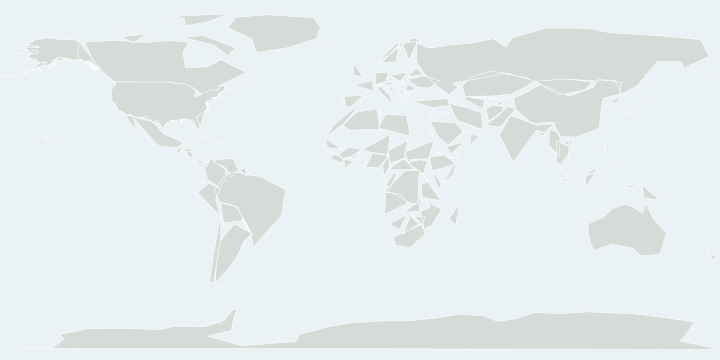


United States, Thailand
Made with Natural Earth