US Publishes DeepSeek Federal Civilian Order and Sanctions Five Chinese Entities; Beijing Threatens a Response
By Asymmetric Analytics
Analysis
In two separate actions, an October 20 notice published a DeepSeek procurement and removal order issued on July 24, and the State Department sanctioned five Chinese entities the State Department says are connected to a former Google engineer convicted of stealing AI trade secrets. China's Commerce Ministry said it firmly opposes both and will take necessary measures.
What the US did
The DeepSeek order (OBSERVED). A notice in the Federal Register , published October 20, says the Secretary of Homeland Security has issued an order that does two things:
Exclusion. Information technology products and services developed by Hangzhou DeepSeek Artificial Intelligence Co., Ltd, including its affiliates, are excluded from federal civilian agency procurements.
Removal. All DeepSeek and DeepSeek-affiliate products, and "third-party products and services developed using DeepSeek implementations", are to be removed from civilian agency information technology.
The legal basis is the Federal Acquisition Supply Chain Security Act of 2018 (FASCSA), and the notice says the order followed a recommendation from the Federal Acquisition Security Council, an interagency body. The appendix to the public inspection filing gives July 24, 2026 as the order's original release date. It requires exclusion and removal immediately after issuance, or an exception request for removal. Written exception requests were due within 60 days of issuance. National security systems and sensitive compartmented information systems are outside its stated coverage.
The sanctions (OBSERVED). On October 19 the State Department said it was sanctioning "five entities connected to People's Republic of China national Linwei Ding" under the Protecting American Intellectual Property Act (PAIPA). The Treasury's Office of Foreign Assets Control (OFAC), which runs US sanctions lists, named them : four Beijing entities in the Qiji Chuangtan group (also known as MiraclePlus), including two venture-capital funds, and Shanghai Zhisuan Technology Co Ltd. OFAC issued two general licences ( General License 1 , General License 2 ). Its wind-down licence covers four named MiraclePlus entities and certain entities they own; it does not name Shanghai Zhisuan.
The case behind it (OBSERVED). A federal jury in San Francisco convicted Ding, a former Google software engineer, on January 29, 2026, of seven counts of economic espionage and seven counts of theft of trade secrets, the Justice Department said . The secrets concerned Google's AI supercomputing data centres, including its custom Tensor Processing Unit chips. The State Department release mentions only the seven theft counts.
What China said
Both answers came from a spokesperson for China's Ministry of Commerce (MOFCOM) on the evening of October 20, Beijing time. Quotations are Asymmetric Analytics translations (CLAIMED BY MOFCOM). These are MOFCOM's positions, not independently verified findings.
On DeepSeek. China is "strongly dissatisfied and firmly opposed". The spokesperson said the US had disregarded "the important consensus reached by the two heads of state" and was "using national security as a pretext for suppression and containment". China "will take all necessary measures" against any action that substantively harms its interests, according to the MOFCOM statement . It also urged the US to make use of the China-US AI dialogue mechanism.
On the sanctions. China "firmly opposes" them and says Chinese AI firms' progress comes from long-term research, not theft. It urged the US to correct its approach quickly, "otherwise it will take necessary measures in response", according to a second MOFCOM statement . It did not name the five entities.
Neither statement says what the measures would be.
How the two tools work
The two actions use different levers, and the difference matters.
A procurement exclusion governs what the government itself may buy and run. It does not ban DeepSeek for private companies or the public. Its reach comes from the government's size as a buyer: suppliers of covered products could face agency compliance checks, subject to the order's scope and exceptions. The order's "third-party" language means it could reach products sold by other vendors, not only DeepSeek's own. How far depends on how agencies read "developed using DeepSeek implementations", which the notice does not define.
PAIPA sanctions work through the financial system. PAIPA, signed in January 2023 ( S.1294 ), requires the government to pick at least five penalties from a menu for each foreign entity it names over significant trade-secret theft. OFAC placed the five on its Non-SDN Menu-Based Sanctions List, a list separate from its better-known Specially Designated Nationals list, and applied five menu items to each: property blocking subject to US jurisdiction; restrictions on loans and credits from US financial institutions exceeding $10 million over 12 months, with a humanitarian exception; certain foreign-exchange and banking prohibitions; and restrictions on significant equity or debt investment by US persons. Applicable exceptions include goods imports and licensed transactions.
An analogy: the first tool is a buyer closing its own shop door to a supplier. The second tool restricts covered financial dealings with named entities, subject to US jurisdiction and exceptions. The shop-door analogy breaks down here because the sanctions hit five named entities, not DeepSeek itself.
The causal chain
Observed: DHS order on DeepSeek (procurement) + PAIPA designations (finance) → two MOFCOM statements threatening unspecified countermeasures.
Conditional steps (not yet observed):
Federal technology suppliers. If agencies read the third-party clause broadly, contractors could have to audit and replace models built on DeepSeek code, a compliance cost for them.
Counter-measures (CONDITIONAL). If Beijing acts, its options and targets are unknown. MOFCOM's reference to the leaders' consensus is diplomatic framing, not evidence that retaliation is more likely. These records provide no base rate for whether such warnings lead to action.
Investment flows. The investment ban on two Beijing venture funds signals that US scrutiny can extend from an individual to the funds around a startup. Whether it changes how US investors view Chinese AI start-up funds is a THESIS with no data yet.
What is not justified: neither action bans DeepSeek in the US private sector. No official text says DeepSeek is connected to the Ding case, and a juxtaposition of two actions does not establish a coordinated US campaign or a DeepSeek–Ding connection. No market reaction is measured here, and nothing in these records supports a view on any company's shares or any digital asset.
Counter-case
The practical bite may be small. If civilian agencies already avoid DeepSeek, the order mainly formalises existing practice. If the sanctioned entities have little US exposure, blocking their US property and dealings changes little for them. And MOFCOM's "necessary measures" is a warning, not a commitment to any specific step.
What the evidence does not show
Whether any countermeasure has been decided.
What we're watching
Agency implementation guidance and decisions on exceptions.
Any MOFCOM announcement naming countermeasures, such as an unreliable-entity listing or an export-control step.
Further FASCSA orders on other AI developers.
What would change our view
A Chinese countermeasure aimed at named US firms would turn a war of words into a measurable trade action. Agency guidance that reads the third-party clause narrowly would shrink the order's reach.
Sources
Notice of Order Regarding Exclusion and Removal of DeepSeek Products From Federal Civilian Executive Branch Information Technology Systems and Procurements , Department of Homeland Security, Federal Register, October 20, 2026 ( PDF ).
Public inspection filing of the DHS DeepSeek order (appendix reviewed for release date, exceptions and scope), Federal Register, October 20, 2026.
Imposing Sanctions to Protect Americans from Intellectual Property Theft , US State Department, October 19, 2026.
PAIPA Designations; Issuance of Associated General Licenses , US Treasury OFAC, October 19, 2026.
OFAC General License 1 , US Treasury OFAC, October 2026.
OFAC General License 2 , US Treasury OFAC, October 2026.
Former Google Engineer Found Guilty of Economic Espionage and Theft of Confidential AI Technology , US Justice Department, January 30, 2026.
MOFCOM spokesperson on the DHS federal procurement exclusion and removal order , October 20, 2026 (Chinese).
MOFCOM spokesperson on US sanctions on Chinese firms over trade secrets , October 20, 2026 (Chinese).
S.1294, Protecting American Intellectual Property Act of 2022 , congress.gov.
Quotations from Chinese documents are Asymmetric Analytics translations.
Places in this story
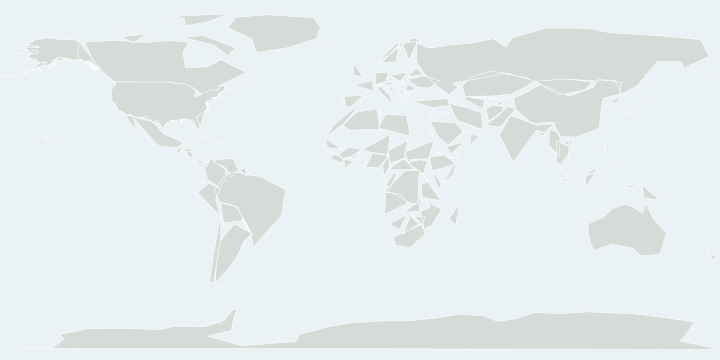
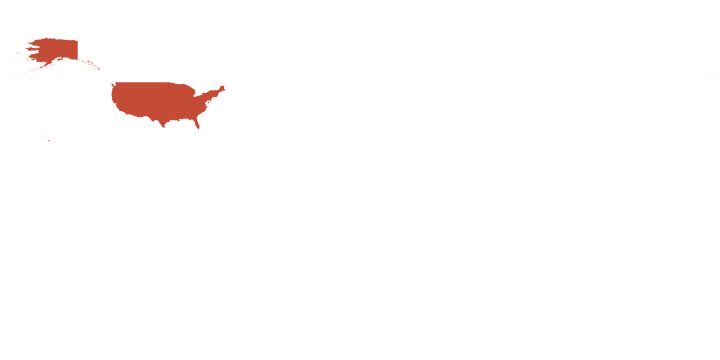

United States, China
Made with Natural Earth