Singapore's BLOOM Lists Malaysia and Thailand as Ripple Pilots XRPL Trade Settlement
By Asymmetric Analytics
Analysis
Singapore's central bank now lists Bank Negara Malaysia and the Bank of Thailand as policymaker members of BLOOM, its cross-border digital-money initiative, alongside 24 firms including Ripple, Circle, Visa and Mastercard. Ripple's piece of it is a trade-finance pilot that settles in its RLUSD stablecoin on the XRP Ledger.
The Monetary Authority of Singapore (MAS) updated its BLOOM page on October 23. The name stands for Borderless, Liquid, Open, Online, Multi-currency, and MAS describes it as "a public-private sector collaborative initiative to advance next-generation settlement infrastructure for domestic and cross-border payments and financial transactions." The page now lists three policymaker members (MAS, Bank Negara Malaysia and the Bank of Thailand), the World Bank Group, and 24 industry members. They range from banks (DBS, OCBC, UOB, J.P. Morgan, Standard Chartered, Maybank, Kasikornbank) to payment networks (Visa, Mastercard), stablecoin and crypto firms (Circle, Coinbase, Anchorage Digital, StraitsX, Ripple) and Partior, a bank-owned settlement network.
What BLOOM is trying to fix
Moving money across a border today usually means a chain of correspondent banks, each holding accounts with the next, each with its own hours, checks and fees. BLOOM's bet is that digital money can shorten that chain, but only if the sending and receiving sides agree on which forms of it they will accept.
MAS names two kinds of settlement asset. Tokenised commercial bank money is an ordinary bank deposit recorded on a blockchain-style ledger, so it can move and be programmed like a token while remaining a claim on a regulated bank. Stablecoins "that meet regulatory expectations" are tokens issued by a non-bank and backed by reserves, built to hold a fixed value against a currency such as the US dollar. MAS lists four focus areas: acceptance and settlement across jurisdictions, interoperability between digital-money arrangements, programmable controls such as identity checks and sanctions screening, and agentic payments, where software agents pay within preset limits. Its target uses are wholesale: corporate treasury, trade finance and payments in G10 and Asian currencies.
An analogy: BLOOM is less a new payment rail than an agreement on plug sockets, so that a ringgit-side bank and a Singapore-side bank can connect whichever approved rail a deal uses. That is why central-bank participation could matter. Malaysia's and Thailand's regulators can help explore requirements for ringgit- and baht-linked arrangements, but MAS has not announced live corridors, common rules, or the removal of bilateral agreements.
Ripple's part, and where XRP fits
Ripple announced its participation on March 25. The company says its pilot with Unloq, a supply-chain finance firm, runs Unloq's SC+ platform on the XRP Ledger and uses Ripple USD (RLUSD), Ripple's dollar stablecoin, to release payment when agreed commercial conditions such as shipment verification are met. Ripple says this can improve risk transparency and access to financing for small exporters. It has not published pilot volumes, counterparties or a timetable.
The settlement asset in that pilot is RLUSD, not XRP. XRP still enters at the network level. On the XRP Ledger every transaction burns a fee in XRP: the documentation puts the standard minimum at 10 drops (0.00001 XRP) and says the XRP "is irrevocably destroyed." Each account ordinarily needs a base reserve of 1 XRP, with a further 0.2 XRP for most owned ledger objects. A trust line lets an account hold a token such as RLUSD; the XRP Ledger documents an exception for the first two trust lines on accounts funded with only the base reserve. So this proposed trade-finance flow would require XRP for account reserves and transaction fees, although the fee can vary and reserve requirements can change. A larger role, such as XRP as a bridge currency between ringgit, baht and dollars, is not part of what Ripple has described for BLOOM.
BLOOM is also built to be multi-rail. Circle's dollar stablecoin, banks' tokenised deposits and Partior's bank network are all inside the same initiative. Malaysia is building its own rails too: on October 20, Bank Negara Malaysia launched SSDS+ , a platform for tokenised bonds and sukuk that settles the payment leg in central bank money through its RENTAS+ system.
Worth knowing: BLOOM is MAS's second act. The BLOOM page says it builds on Project Orchid, which explored use cases for a digital Singapore dollar and the infrastructure to support it.
The causal chain
What happened: MAS lists Bank Negara Malaysia and the Bank of Thailand as BLOOM policymaker members, alongside 24 firms including Ripple; Ripple says its BLOOM pilot would settle trade payments in RLUSD on the XRP Ledger.
Mechanism, if implemented: common rules could make it easier for regulated digital money to move across Singapore, Malaysia and Thailand; MAS has not shown that such rules or corridors are live. The XRP Ledger is one proposed rail among stablecoins, tokenised deposits and bank networks.
Conditional for XRP: wider BLOOM use of the XRP Ledger would raise XRP fee burn and reserve holdings through transaction fees and account reserves; the amounts are protocol parameters rather than fixed economic exposure; a material change would need XRP itself to be used as a settlement or bridge asset, which no BLOOM document describes.
What we're watching
Whether MAS, Bank Negara Malaysia or the Bank of Thailand name live cross-border pilots, currencies and dates.
Results from the Ripple and Unloq trade-finance pilot, and whether Malaysian or Thai banks join it.
Which rails BLOOM's first cross-border transactions actually use: RLUSD on the XRP Ledger, Circle's USDC, tokenised deposits or Partior.
Sources
BLOOM , Monetary Authority of Singapore, last updated October 23, 2026.
Ripple Joins Monetary Authority of Singapore's BLOOM Initiative and Partners with Unloq to Advance Programmable Settlement Infrastructure in Trade Finance , Ripple, March 25, 2026.
Transaction Cost , XRP Ledger documentation.
Reserves , XRP Ledger documentation.
BNM launches SSDS+: Powering digital and tokenised bond and sukuk issuance , Bank Negara Malaysia, October 20, 2026.
Places in this story
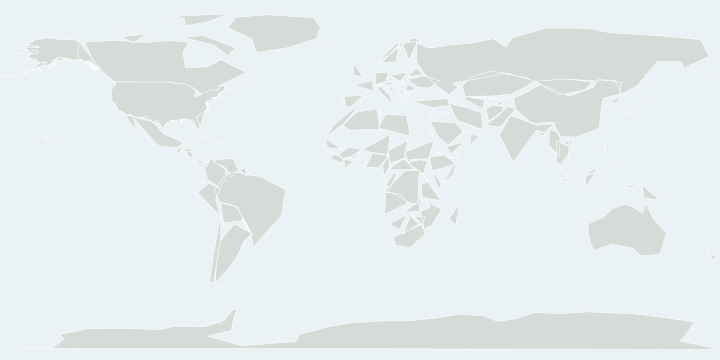



Singapore, Malaysia, Thailand
Made with Natural Earth