Saudi Arabia and Singapore Plan an Oil Buffer Beneath Jurong Island
By Asymmetric Analytics
Analysis
Singapore and Saudi Arabia have proposed storing Saudi crude beneath Jurong Island starting in the second half of 2027. Their October 26 announcement is an agreement to pursue the arrangement, not a signed storage contract or an operational emergency reserve.
Singapore's Ministry of Energy, Trade and Industry and Saudi Arabia's Ministry of Energy announced a "joint intent to establish a crude oil storage arrangement in Singapore." As a first step, Singapore's Energy Market Authority and JTC Corporation, the state agency that develops industrial land, exchanged a memorandum of understanding (MoU), which records an initial understanding, with Saudi Aramco at Singapore International Energy Week.
Energy minister Tan See Leng gave the timetable in his keynote lecture the same day: storage from the second half of 2027, with negotiations aimed to conclude "in a few months' time." The ministry's full release adds that the stored crude "will support Singapore's energy needs in the event of a supply disruption." Neither the release nor the speech specifies the Saudi storage volume, commercial terms or any enforceable emergency-access rights for Singapore.
Why a producer stores oil in a customer's backyard
Crude delivered from a distant terminal must first complete its voyage. If that route passes through a closed chokepoint, delivery can be delayed. Oil already stored near a buyer can shorten that wait, like a spare tank in the garage. But access depends on the contract, and the buffer lasts only until usable stocks run down.
Tan presented the proposal as a response to supply-chain risks. He said "the closure of the Strait of Hormuz continues to disrupt global energy flows" and that the situation "may escalate further" after Houthi attacks on Saudi airport and energy infrastructure. He said the arrangement "enhances the resilience of the Saudi crude oil supply chain in Southeast Asia, as well as contributes to Singapore's energy security and resilience in the event of supply disruptions."
The proposal could serve both sides. For Saudi Arabia, crude already sitting in Singapore could reach Asian refiners without waiting on a Gulf voyage. For Singapore, which Tan counts among energy importers exposed to supply shocks, it would add a stock of crude on its own territory. Tan also warned of "resource nationalism," where suppliers in a crunch put home needs first, as a risk importers must now plan around.
The caverns
When construction began in 2007, Singapore's trade minister described the Jurong Rock Caverns as the first underground rock cavern for the oil and chemicals industry in Singapore and Southeast Asia. They lie beneath the seabed of the Banyan Basin on Jurong Island, which Singapore built in the 1990s by reclaiming land and joining seven islands into a base for its chemicals industry. The minister said the first phase would offer 1.47 million cubic metres of storage for liquid hydrocarbons such as crude oil, condensate, naphtha and gasoil. That is roughly 9.2 million barrels at the standard conversion of 6.29 barrels per cubic metre. It is the planned capacity of the first phase across all those products, not the Saudi allocation.
Worth knowing: putting storage underground preserves scarce surface land. The minister said the caverns would save the equivalent of at least 60 hectares of surface land for higher-value manufacturing.
The causal chain
Announced: Singapore's ministry published the joint intent and the MoU exchange; Tan targets storage from the second half of 2027, with the final agreement still to be negotiated.
Mechanism: crude already stored near Asian buyers could shorten delivery times and provide a temporary supply buffer. The benefit depends on actual fill levels, access rights, withdrawal capacity and replenishment.
If the terms allow it: an enforceable emergency-access right could give Singapore a temporary supply buffer. Commercial storage could still improve local availability, but physical location alone does not guarantee Singapore priority access or establish a strategic reserve.
Who benefits if the agreement takes shape
For Saudi Aramco, crude already in Southeast Asia could shorten the final delivery leg to some customers when Gulf shipping is disrupted. That is a logistical advantage, not evidence of greater production or automatically higher oil prices. Storage and financing costs also matter: someone must pay to hold, maintain and replenish the inventory.
For Asian refiners, a geographically closer supply buffer could reduce one source of delivery uncertainty. But the commercial contract determines who can buy or draw down that oil during a shortage. Singapore's announcement does not disclose whether its government or refiners would have priority access. An arrangement that gives Aramco commercial flexibility is different from an enforceable Singapore strategic stockpile.
The assets most directly affected would be physical crude inventories, tanker demand, storage capacity and the working capital tied up in cargo. A benefit to any particular listed oil, shipping or crypto asset cannot be inferred from the MoU alone.
What we're watching
The final agreement, which Tan expects within months: the volume, the term and whether Singapore gets first claim on the oil in a disruption.
Whether the eventual terms establish emergency-access rights and change regional supply resilience, rather than simply extending an established commercial storage model.
Independently documented shipping disruptions and Saudi infrastructure outages, and whether they affect filling or replenishing the proposed stockpile.
Sources
Singapore and the Kingdom of Saudi Arabia announce joint intent to establish a crude oil storage arrangement in Singapore , Ministry of Energy, Trade and Industry, Singapore, October 26, 2026.
Singapore Energy Lecture 2026 by Minister for Energy, Trade and Industry (Energy and Industry) Dr Tan See Leng , Ministry of Energy, Trade and Industry, Singapore, October 26, 2026.
Minister Lim Hng Kiang at the Ground-breaking Ceremony of the Jurong Rock Cavern , Ministry of Energy, Trade and Industry, Singapore, February 8, 2007.
Places in this story
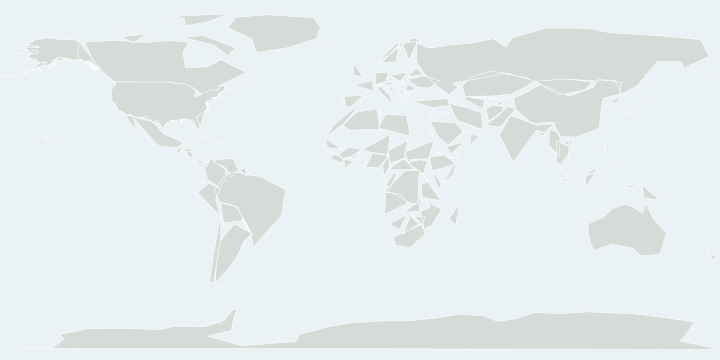


Singapore, Saudi Arabia
Made with Natural Earth