Malaysia
Updated
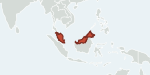
Summary
Malaysia is a middle-income Southeast Asian economy whose central bank, Bank Negara Malaysia (BNM), has held its Overnight Policy Rate (OPR) at 2.75% at every Monetary Policy Committee meeting in 2026. The economy is export- and manufacturing-heavy: the Ministry of Finance reported 6.0% year-on-year growth in Q2 2026 with a trade surplus of RM84 billion. In digital money it is building public rails rather than waiting for private ones: BNM launched SSDS+, a distributed-ledger platform for tokenised bonds and sukuk that settles the payment leg in central bank money, on 2026-10-20, and is running three ringgit-stablecoin and tokenised-deposit pilots. On 2026-10-23 Singapore's MAS announced that BNM and the Bank of Thailand had joined its BLOOM cross-border digital-money initiative as policymaker members.
Key numbers
Overnight Policy Rate (OPR): 2.75%, unchanged at all five 2026 meetings (as of 2026-09-03). Source: bnm.gov.my
Real GDP growth, Q2 2026 (y/y): 6.0% (MOF); 5.8% DOSM advance; Q1 5.4% (as of 2026-06-30). Source: mof.gov.my
Real GDP growth, H1 2026 (y/y): 5.7% (as of 2026-06-30). Source: mof.gov.my
BNM 2026 growth outlook: about 5% (government forecast 4.0% to 5.0%) (as of 2026-09-03). Source: bnm.gov.my
Headline inflation, August 2026 (y/y): 1.9% (as of 2026-08-31). Source: dosm.gov.my
Headline / core inflation, Jan to Jul 2026 average: 1.8% / 2.0% (as of 2026-07-31). Source: bnm.gov.my
Unemployment rate, Q2 2026: 3.0% (as of 2026-06-30). Source: mof.gov.my
Trade surplus, Q2 2026: RM84 billion (as of 2026-06-30). Source: mof.gov.my
Gross international reserves: US$131.8 billion (RM537.7 billion) (as of 2026-09-30). Source: bnm.gov.my
USD/MYR, KL reference rate: 4.0841 (as of 2026-10-23). Source: bnm.gov.my
DAIH pilots (ringgit stablecoin / tokenised deposit): 3 initiatives onboarded; policy clarity promised by end-2026 (as of 2026-02-11). Source: bnm.gov.my
Timeline
2026-10-23 — MAS announces BNM and the Bank of Thailand as BLOOM policymaker members. (Source: mas.gov.sg)
2026-10-20 — BNM launches SSDS+, a tokenised bond and sukuk platform settling in central bank money via RENTAS+. (Source: bnm.gov.my)
2026-10-07 — BNM publishes reserves as at 2026-09-30: US$131.8 billion. (Source: bnm.gov.my)
2026-09-18 — DOSM releases August CPI: 1.9% year on year. (Source: dosm.gov.my)
2026-09-03 — MPC holds OPR at 2.75%; 2026 growth seen at about 5%. (Source: bnm.gov.my)
2026-08-14 — MOF press release gives Q2 2026 growth of 6.0% and H1 growth of 5.7%. (Source: mof.gov.my)
2026-07-17 — DOSM advance estimate: Q2 2026 GDP up 5.8% year on year. (Source: dosm.gov.my)
2026-07-09 — MPC holds OPR at 2.75%. (Source: bnm.gov.my)
2026-05-07 — MPC holds OPR at 2.75%. (Source: bnm.gov.my)
2026-03-05 — MPC holds OPR at 2.75%. (Source: bnm.gov.my)
2026-02-11 — BNM's Digital Asset Innovation Hub onboards three ringgit-stablecoin and tokenised-deposit pilots. (Source: bnm.gov.my)
2026-01-22 — MPC holds OPR at 2.75%. (Source: bnm.gov.my)
Key actors and links
Singapore (country:singapore): MAS convenes BLOOM and is the policymaker partner for BNM's cross-border digital-money work.
Thailand (country:thailand): Fellow BLOOM policymaker member; the Bank of Thailand joined on the same 2026-10-23 announcement.
Ripple (actor:ripple): BLOOM participant (named in the MAS release); its Unloq trade-finance pilot (per Ripple's 2026-03-25 release) uses RLUSD on the XRP Ledger.
XRP Ledger (actor:xrp-ledger): One proposed rail inside BLOOM; AA read nothing tying BNM to it directly.
RLUSD (asset:crypto-rlusd): Ripple's dollar stablecoin named in the BLOOM pilot; not a ringgit instrument.
USDC (asset:crypto-usdc): Circle's stablecoin; Circle is an existing BLOOM participant per the MAS release.
Stablecoins (theme:stablecoins): BNM has promised a position on ringgit stablecoins by end-2026.
Tokenized deposits (theme:tokenized-deposits): Tested in BNM's DAIH pilots and a named BLOOM settlement-asset type.
Tokenization (theme:tokenization): SSDS+ tokenises bonds and sukuk on a ledger.
Cross-Border Settlement (theme:cross-border-settlement): BLOOM's core subject; BNM is a policymaker member.
CBDC (theme:cbdc): BNM's DAIH release links pilot learnings to its wholesale CBDC work.
Southeast Asia (region:southeast-asia): Regional setting for BLOOM and ASEAN payment linkages.
Natural gas (commodity:natural-gas): Higher gas output drove Q2 mining growth of 10.2% in DOSM's advance estimate.
FX (market:fx): Ringgit trades around 4.08 per US dollar on BNM's reference rate.
Why it matters now
Two things landed within four days. On 2026-10-20 BNM said SSDS+, built in-house on cloud and distributed-ledger technology and integrated with its RENTAS+ payment system, is ready for wholesale issuance and for tokenised government and corporate retail bonds. On 2026-10-23 MAS announced BLOOM's expansion; the BNM Deputy Governor said frictionless cross-border payments using multiple digital currencies are becoming realistic, but no live corridors, currencies or dates were stated. The domestic backdrop is steady: BNM held the OPR at 2.75% on 2026-09-03, citing first-half growth of 5.7%, a 2026 outlook of about 5%, and headline inflation of 1.8% over the first seven months, with the Middle East conflict and lower commodity output named as downside risks. BNM said in February that it intends to give greater clarity on ringgit stablecoins and tokenised deposits by end-2026, which makes the next two months the window for a policy signal. Open question (UNKNOWN): BNM describes the stance as appropriate and gives no rate-change signal; AA found no primary-source forecast of the next OPR move, so the direction of the next change is not asserted here. A reader should also keep apart what BLOOM membership proves (participation in a policy forum) from what it does not (any live ringgit cross-border product).
Risks and open questions
Bull case: Growth is above the government's 4% to 5% forecast range (H1 5.7%), inflation is low (1.9% in August), unemployment is 3.0% and reserves are US$131.8 billion, so BNM has room to wait. On digital money, Malaysia has a working central-bank-money tokenisation rail (SSDS+ with RENTAS+), three live pilots and a BLOOM seat, which could let it shape rules for ringgit-linked digital money before private rails set them. If BNM's end-2026 clarity favours regulated tokenised deposits and ringgit stablecoins, Malaysian banks and sukuk issuers gain a domestic ledger market.
Bear case: Growth leans on exports and manufacturing; BNM itself lists a prolonged Middle East conflict and lower commodity output as risks, and the Q2 jump partly reflects higher gas output. BLOOM is a forum: MAS stated no corridors, timelines or common rules, so membership may produce no live product. SSDS+ is wholesale infrastructure with no announced issuance, volumes or participants, and ringgit-stablecoin policy could end up restrictive.
Falsifiers: - A BNM end-2026 statement that bars or sharply limits ringgit stablecoins would weaken the view that Malaysia is moving toward private-token rails. - A first SSDS+ tokenised bond or sukuk issuance with named participants would falsify the claim that SSDS+ is only infrastructure without use. - MAS or BNM naming a live BLOOM corridor and currencies would falsify the 'forum only' reading; silence into 2027 would support it. - Q3 GDP growth falling below 4% would weaken the strong-growth bull case. - A November OPR move would falsify the 'no change signalled' reading of BNM's guidance.
Value accrual gate: Not a crypto asset; no token value-accrual gate applies. Gains and losses fall on Malaysian banks, bond and sukuk issuers and investors, the ringgit and BNM's policy credibility; for crypto, BLOOM participation or SSDS+ use does not by itself create XRP or stablecoin-holder value.
What to watch
BNM Monetary Policy Committee decision (statement at 3:00 pm local time). (2026-11-05); Source: bnm.gov.my
DOSM September CPI release. (2026-11-19); Source: dosm.gov.my
BNM position on ringgit stablecoins and tokenised deposits promised by end-2026. (by 2026-12-31); Source: bnm.gov.my
First live tokenised bond or sukuk issuance on SSDS+, with participants named. (no scheduled date); speculative, no scheduled source
MAS, BNM or BoT naming live BLOOM corridors, currencies or dates. (no scheduled date); speculative, no scheduled source
DOSM final Q2 and Q3 2026 GDP releases (Q3 timing not verified by AA). (about mid-November 2026); speculative, no scheduled source
AA inference
Inference (AA): Malaysia is a central-bank-led tokenisation story, not a private-stablecoin story. SSDS+ puts the securities leg on a ledger while keeping payment in central bank money through RENTAS+, which suggests BNM wants tokenised assets to settle against its own money rather than against a private token. That is AA's reading of the design, not a BNM statement. BLOOM membership gives BNM a seat where common acceptance rules for tokenised deposits and stablecoins are discussed, so the ringgit-stablecoin position BNM promised by end-2026 is the point at which Malaysia's stance toward rails such as RLUSD on the XRP Ledger or USDC would become visible. Nothing read by AA ties Malaysia to XRP demand.
Sources
BNM's OPR decisions table shows the OPR unchanged at 2.75% at all five 2026 meetings to date (2026-01-22, 03-05, 05-07, 07-09, 09-03). (Source: bnm.gov.my, accessed 2026-10-26)
BNM's 2026-09-03 Monetary Policy Statement held the OPR at 2.75%; first-half 2026 growth was 5.7%, BNM expects about 5% growth in 2026 with resilience into 2027, headline inflation averaged 1.8% and core 2.0% over the first seven months, and risks include a prolonged Middle East conflict and lower commodity output. (Source: bnm.gov.my, accessed 2026-10-26)
BNM's 2026-07-09 statement held the OPR at 2.75%, put 2026 growth 'firmly within' a 4% to 5% range, and gave first-five-month inflation of 1.7% headline and 2.1% core. (Source: bnm.gov.my, accessed 2026-10-26)
The BNM MPC schedule lists 2026-11-05 as the sixth and final 2026 decision date. (Source: bnm.gov.my, accessed 2026-10-26)
DOSM's advance estimate (2026-07-17) put Q2 2026 GDP growth at 5.8% year on year, up from 5.4% in Q1, led by manufacturing (+7.5%), mining (+10.2%, higher natural gas output) and services (+5.4%); agriculture fell 3.7%. (Source: dosm.gov.my, accessed 2026-10-26)
The Ministry of Finance's 2026-08-14 press release gave Q2 2026 growth of 6.0% (H1 5.7%), private consumption +4.8%, total trade up 34.1% to RM1 trillion, trade surplus RM84 billion, unemployment 3.0%, Q2 inflation 1.9%, and a government 2026 forecast of 4.0% to 5.0%. (Source: mof.gov.my, accessed 2026-10-26)
DOSM reported August 2026 consumer-price inflation of 1.9% year on year (release 2026-09-18; next release 2026-11-19). (Source: dosm.gov.my, accessed 2026-10-26)
BNM's statement as at 2026-09-30 (published 2026-10-07) shows gross international reserves of US$131.8 billion (RM537.7 billion); the 2026-06-15 statement showed US$130.5 billion. (Source: bnm.gov.my, accessed 2026-10-26)
The BNM Kuala Lumpur USD/MYR reference rate was 4.0841 on 2026-10-23. (Source: bnm.gov.my, accessed 2026-10-26)
On 2026-10-20 BNM announced SSDS+, its in-house platform, built with cloud and distributed-ledger technology, for issuing, holding and safekeeping tokenised bonds and sukuk; it builds on the existing SSDS depository, is integrated with RENTAS+ so that bond payments settle in central bank money, and is ready to support wholesale issuance and tokenised government and corporate retail bonds. Governor Abdul Rasheed Ghaffour called it a major milestone. The release names no participants. (Source: bnm.gov.my, accessed 2026-10-26)
On 2026-02-11 BNM's Digital Asset Innovation Hub onboarded three initiatives testing ringgit stablecoins and tokenised deposits in a controlled environment for domestic and cross-border wholesale payments and tokenised-asset settlement; BNM intends to give greater clarity on ringgit stablecoins and tokenised deposits by end-2026. The hub launched in June 2025 and has engaged over 30 players. Participants are not named on the page. (Source: bnm.gov.my, accessed 2026-10-26)
MAS announced on 2026-10-23 that Bank Negara Malaysia and the Bank of Thailand joined BLOOM as policymaker members; the focus is common approaches to acceptance, exchange and settlement of digital money across jurisdictions, interoperability, and programmable controls such as identity checks and sanctions screening. No timelines were stated. BNM Deputy Governor Aznan bin Abdul Aziz said frictionless cross-border payments using multiple digital monies are now closer to a tangible reality. (Read directly from the MAS release dated and last updated 2026-10-23; its Annex A participant list was not read.) (Source: mas.gov.sg, accessed 2026-10-27)
Ripple's release of 2026-03-25 (Singapore dateline) says it joined BLOOM and will pilot, with Unloq, a cross-border trade settlement use case on Unloq's SC+ trade-finance infrastructure on the XRP Ledger using RLUSD, with payment released when predefined commercial conditions such as shipment verification are met. It gives no volumes, counterparties, timetable or role for XRP. (Source: ripple.com, accessed 2026-10-27)